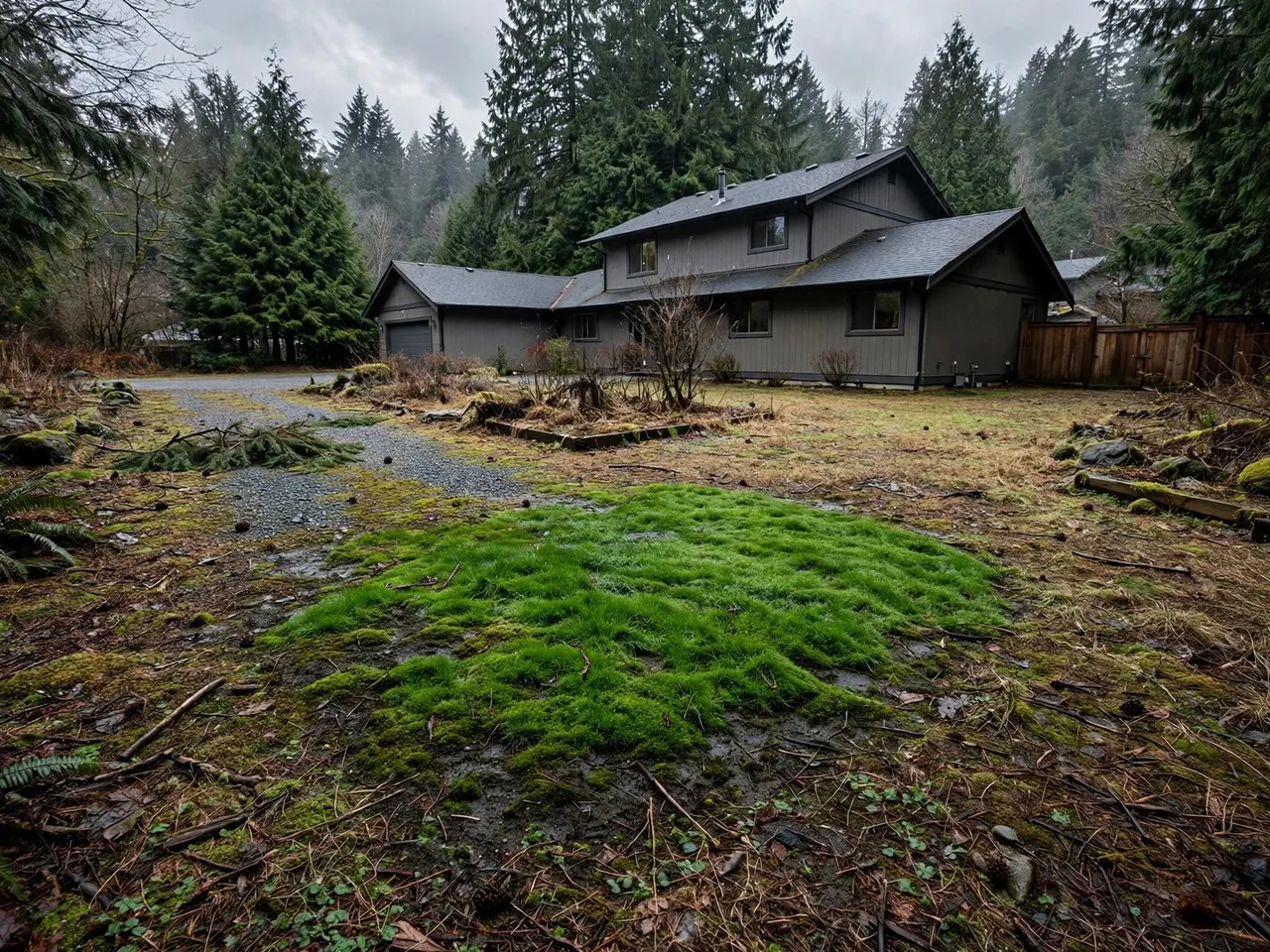
A drainfield fails quietly, then all at once. The soil under your yard stops absorbing wastewater, the water has nowhere to go, and the symptoms show up inside the house and across the lawn. In Snohomish County — where roughly three quarters of the county's roughly 80,000 septic systems are 25 years old or older, and where wet winters saturate the ground for months — drainfield failure is the most expensive septic problem a homeowner faces. Catching the signs early is worth real money.
The warning signs, in the order they usually appear
Slow drains are usually first, and the key detail is that they are slow throughout the house — every sink, every shower, every toilet — rather than one blocked fixture. A single slow drain is a plumbing problem; all of them slowing together points at the system. Gurgling pipes are the same signal in sound form: air trapped in a system that cannot drain properly.
Sewage smells are next. A smell near the tank or over the drainfield, especially after rain or heavy water use, means wastewater is surfacing or pooling where it should be absorbed underground. A smell inside the house is more urgent — it means the backup is already reaching the living space.
Wet or unusually green areas over the drainfield are the visible sign. A patch of lawn over the field that stays wet when the rest of the yard is dry, or grass that grows noticeably lusher and greener there than anywhere else, is being fed by wastewater. In a wet Snohomish County winter this one is easy to miss, because everything is wet — which is why it matters to look after heavy rain specifically, when a saturated field will show standing water that the rest of the yard does not have.
Sewage backing up into the house is the last sign and the emergency. By the time sewage is coming back up a drain or toilet, the system has already failed. Do not wait for a reply from a website form — call a local emergency septic provider directly right away, and keep people and pets away from any sewage.
Why drainfields fail here
The most common cause is the simplest: solids carried over from a tank that was pumped too late. Sludge and scum build up in the tank, flow into the drainfield, and clog the soil. That is why regular septic tank pumping is the cheapest maintenance a system has — a pumping visit from $650 against a drainfield job in the thousands.
Age is the second factor. Roughly 75% of the county's septic systems are 25 years old or older, so many fields now reaching failure were built to older standards on soils that were marginal to begin with. Around Lake Stevens, the hardpan soil is famously poor at absorbing wastewater — it is the reason the lake perimeter was sewered in the 1970s and 1980s, and septic systems outside the sewer district still sit on that same soil.
Wet winters are the third. A drainfield that copes in a dry summer can fail in a wet winter, when saturated ground cannot take more water. That is why symptoms often appear first between November and March, and why standing water over the field after heavy rain is worth a call even if the drains inside still seem fine.
Individual components fail too: a collapsed distribution box can flood one part of a field while starving another, a clogged effluent filter can back the whole system up, and tree roots can invade pipes and boxes on wooded lots.
What pumping will and will not fix
Pumping removes sludge and scum from the tank. It cannot restore soil that is clogged and no longer absorbs wastewater. This is the distinction that costs homeowners money: booking a pump and hoping for the best when the field has failed wastes the pumping fee and the weeks in which the field keeps getting worse. If the drains stay slow after a pump, or if the field is wet and green, the problem is downstream of the tank. Our guide on septic pumping costs explains what a pumping visit covers; this page is about what happens when the visit is not enough.
Safe first steps
Cut back water use right away: short showers, laundry spread across the week instead of all in one day, fix running toilets and dripping taps. Keep people and pets away from any sewage or wet areas over the field — sewage carries disease, so do not wade through it or try to clear it yourself. Do not use chemical drain cleaners or pour additives into the system; they do not fix a failing field and can make things worse. Do not drive or park heavy vehicles over the tank or drainfield, and do not build anything on it. Note when the symptoms started and what changed — that history is what the inspector will ask for first.
Diagnosis comes before any estimate
No honest price exists before someone has looked at the system. A repair starts with diagnosis: which component has failed, whether the drainfield is affected, and what the soil will still support. That usually means an inspection of the tank, distribution box, and drainfield, a review of the record drawing and previous reports, and — where a replacement or redesign is on the table — soil testing and a design, with permits where required. Our septic repair page explains that process. Be wary of any quote given sight unseen, and of any promise that a single product or additive will restore a failed field.
What the fix costs
Septic repair has no single price, so keep the categories separate. Drainfield repair typically runs $3,000–$12,000 in this county, and drainfield replacement typically $5,000–$20,000. A full system replacement typically runs $15,000–$40,000+, and $25,000–$50,000+ where a full engineered redesign is required. Minor component repairs typically run $300–$1,500, and larger single-component repairs $1,500–$5,000. Every figure is guidance only, never a quote; our Snohomish County septic costs page lists each one with its source and the date it was last checked.
Two county programmes can soften the bill. The Savvy Septic programme rebates up to $200 of minor repairs, and its replacement grants help low-income homeowners with failing systems — see our Savvy Septic rebates guide. If the failure was found during a property-transfer inspection, finding it early is also what keeps a sale on track: a failed system found in the last week before closing can delay the sale, which is why the inspection is best arranged early. Our guide to the property-transfer rule explains the timeline.
Figures last checked November 5, 2026. Sources: The Serviss Group; Septic Solutions LLC; Davis Septic Design; Matthew Konsmo, Western Washington Septic System Guide; Snohomish County Savvy Septic Replacement Grant fact sheet (approx. 75% of the county's 80,000 systems are 25 years old or older).
Seeing wet ground, smells, or slow drains over your field? Ask about septic repair in Snohomish County — a local septic professional will get in touch, usually within an hour between 7am and 8pm Pacific.
Septic Repair and Drainfield Repair in Snohomish County, WA