Septic help in Snohomish County, WA

Property-transfer septic inspection, pumping, and repair in Snohomish County

Snohomish Septic Help connects you with an independent local septic provider. You call or send a request, Scott calls you back personally, and the provider does the work. No runaround, no promise a technician will call.

This is a referral service. Snohomish Septic Help connects visitors with independent providers; those providers perform the work.

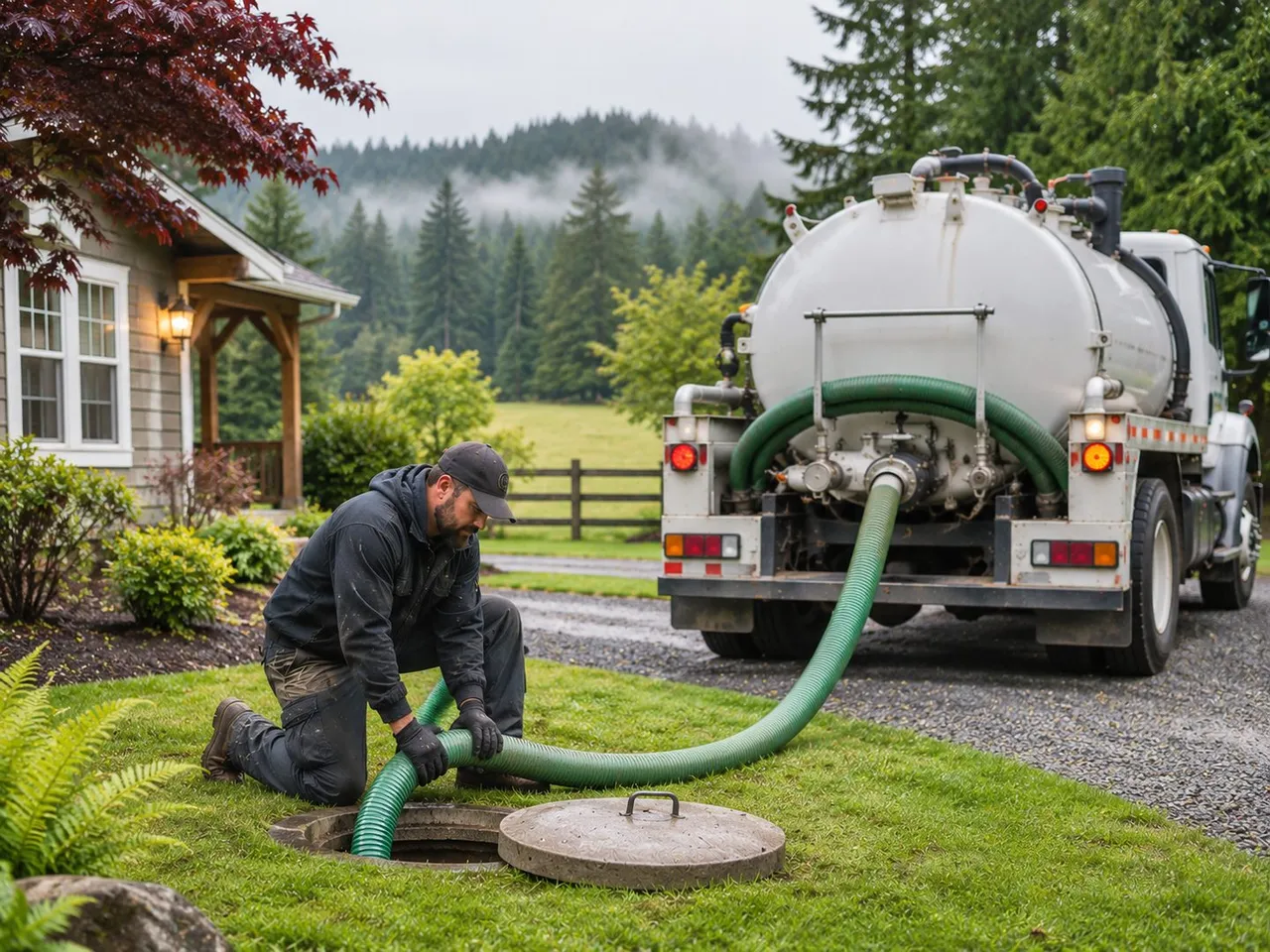
Septic pumper truck and technician working at a home in rural Snohomish County, Washington.Snohomish County, WA

Contact

Request help with your septic system

Tell us what you need. Your request goes to Scott, who will contact you about it. For non-emergency requests only.

Scott
7am-8pm PT
Scott aims to contact you usually within an hour, between 7am and 8pm Pacific Time. Requests sent outside those hours will be answered the next business morning. This is an aim, not a guarantee.

For non-emergency requests only. This form is not monitored continuously. Do not use it for emergencies. If sewage is backing up into your home, call a local emergency septic provider directly.

Request help with your septic system

We only use your details to respond to your request. Your request goes to Scott, who will contact you about it. We will not share your details with any company without asking you first, and we do not use them for marketing.

Services

Snohomish County, WA — the unsewered county ring, not the sewered Everett/Lynnwood/Edmonds city cores.

Property-transfer septic inspection, septic tank pumping, and repair

Septic help for homes on septic in Snohomish County

About 84,000 private septic systems serve homes in Snohomish County, and roughly 2,800 septic properties change hands in a typical year. Since November 1, 2026, Snohomish County has required a property-transfer septic inspection — generally an inspection within 12 months of closing — for properties with a septic system that change hands, with an exemption for newly installed systems. A statewide Washington rule follows on February 1, 2027. This site is a referral service, not a septic company: Scott receives your request and contacts you about it, and an independent local provider performs the work. We do not perform septic work, hold septic licences, or employ technicians, and we will not share your details with any company without asking you first.

How it works

  1. Step 1 — You call or fill out the form

    Tell us the service you need and your town or ZIP code. For non-emergency requests only — if sewage is backing up into your home, call a local emergency septic provider directly right away.

  2. Step 2 — Scott contacts you

    Scott aims to contact you usually within an hour, between 7am and 8pm Pacific Time. Requests sent outside those hours are answered the next business morning. He will confirm what you need and what happens next.

  3. Step 3 — An independent local provider performs the work

    The work itself is done by an independent local septic provider, on that provider's own terms and prices. This site does not promise a quote, an appointment, or a price — only the provider can confirm those for your property.

What to expect

One request, one person to deal with

Tell us what you need once. Scott — the person who runs this referral service — contacts you about it, usually within an hour between 7am and 8pm Pacific Time. No call centre, no being passed around.

The Nov 1, 2026 rule, explained plainly

If you are buying or selling a home on septic, the county's property-transfer inspection rule is probably why you are here. Our inspection page explains what the rule covers in general, what it typically costs, and what to check with the county or your title company for your own property.

Local prices, not national averages

Septic work in Snohomish County costs materially more than the national averages you will find online. Every price on this site is local guidance only — a typical range, never a quote — so you are not misled by a $428 national pumping figure that does not apply here.

Snohomish County, WA

Areas we serve

Snohomish County, WA — the unsewered county ring, not the sewered Everett/Lynnwood/Edmonds city cores.

FAQ

What does the Snohomish County property-transfer septic inspection rule require?

In general, Snohomish County's property-transfer septic inspection rule, which took effect November 1, 2026, requires an inspection by a certified professional within 12 months of closing when a property with a septic system changes hands, with a Report of Property Transfer filed with the county. Systems installed within the previous 12 months are exempt. A Washington statewide rule follows on February 1, 2027 (WAC 246-272A-0270). This is a general explanation, not legal advice: whether an inspection is required for your property, and exactly what it must cover, is something to check with Snohomish County or your title company.

How often should a septic tank be pumped?

As a general guide, most septic tanks need pumping every 3–5 years, depending on household size and tank size. More people and a smaller tank mean more frequent pumping. Slow drains, sewage smells, wet areas over the drainfield, and sewage backing up are common warning signs that a tank is overdue.

What are signs a septic system is failing?

Slow drains, sewage smells near the tank or drainfield, wet or unusually green areas over the drainfield, gurgling pipes, and sewage backing up into the house are common warning signs. If sewage is backing up into your home, do not use this form — call a local emergency septic provider directly right away.

How much does a septic inspection cost in Snohomish County?

As guidance only, never a quote: a routine inspection typically runs around $500, and a property-transfer inspection typically runs $750 plus the $245 county Report of Property Transfer fee — $995 before pumping, if pumping is also needed. A combined inspection and pumping visit is often budgeted at $1,000–$1,500. Only the provider can confirm a price for your property.

Who pays for the property-transfer inspection?

The county rule does not set who pays — that is a matter for the buyer and seller to agree, usually as part of the sale. What matters is timing: the inspection needs to happen within 12 months of closing, so it is best arranged early in the sale rather than left to the last week.
Buying or selling a home on septic? Start with the inspection.

If a property is changing hands, the inspection is usually the first step — and the one with a deadline. Call or send a request and Scott will contact you about it.

Call now · (425) 970-9836