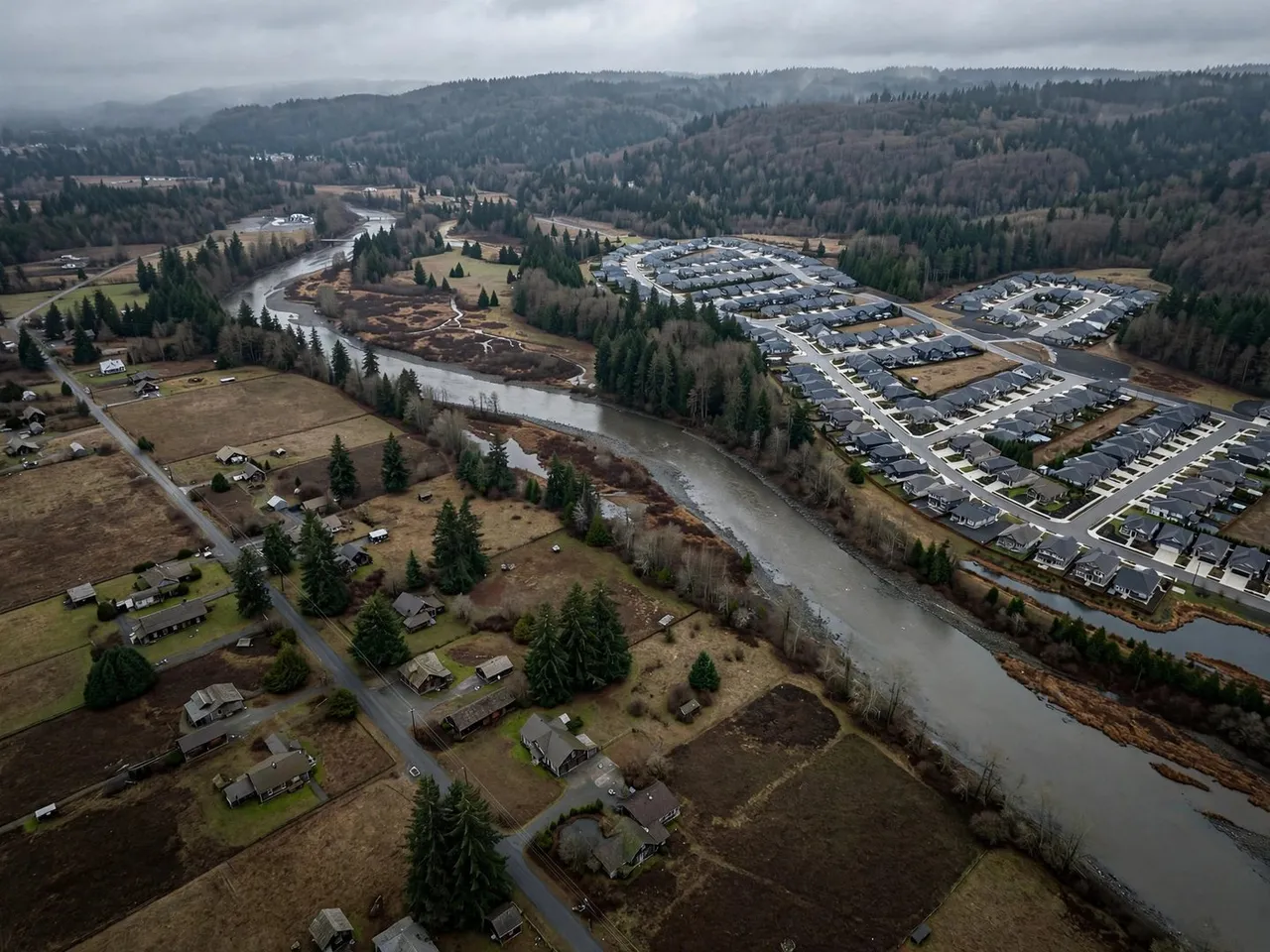
About 84,000 private septic systems serve homes in Snohomish County — but not every home in the county is on septic. The cities are sewered, the unincorporated ring around them is not, and the boundary between the two runs through mailing addresses that look identical. A "Snohomish" or "Marysville" address tells you almost nothing on its own. This guide explains how to check, town by town, and what to do when the answer is not obvious.
The rule that decides most of it
In Washington, property outside a city's Urban Growth Area (UGA) is generally prohibited from connecting to sewer. That single rule explains most of the map: the incorporated city and its UGA are sewered, and everything outside the UGA is on septic. So in Snohomish County, "unsewered" means, in practice, outside the city limits and outside the UGA — plus older homes inside a city that sit more than 200 feet from a sewer main. The county has about 84,000 on-site systems, the region's largest septic count, and roughly a third of Washington households are on septic.
There are two exceptions worth knowing. First, some cities have documented septic homes inside their limits: Stanwood's own sewer plan states that existing single-family homes with septic systems in good working condition may continue to be used, and connection is not required for structures 200 feet or more from a public sewer. Second, a small number of properties inside Granite Falls are still on septic even after the city's new treatment plant. Everywhere else in the county, the in-city core is sewered and the septic homes are outside it.
How to check your own home
Start with the Snohomish County PDS Map Portal, which has a Utility Districts layer showing the sewer service boundary — search for the portal at snohomishcountywa.gov and look for the map portal page. If the map is inconclusive, ask the provider directly: the city public works department, or the sewer district where one exists (the Lake Stevens Sewer District, for example). A third route is the system's own paperwork: ask the Snohomish County Health Department what records exist for the property. If the home is on septic, the county usually holds a record drawing (as-built) and previous inspection and pumping reports, and service history is tracked in the OnlineRME database. If no septic records exist at all, that is weak evidence the home is on sewer — but confirm it rather than assuming, because missing records are common on older systems.
On the ground, there are physical clues. A septic tank lid, risers, or a vent pipe in the yard, a drainfield area that must be kept clear of vehicles and structures, and a cleanout or inspection port all point to septic. A sewer cleanout near the street, a monthly sewer bill, and no visible tank or field point to sewer. None of these is proof on its own — the map and the county records are what settle it.
Town by town: where the septic homes are
Snohomish. The city itself is sewered, but the unincorporated area around it is on septic — the SR-9 corridor, Machias, Cathcart, Three Lakes, and the Snohomish River valley. Many existing homes north of Blackmans Lake and east of SR-9, in the former NE Sewer Area, are still on septic even though the city's North Sewer Trunkline was completed in 2025: the trunkline ends at Lakemount Drive, and a home is only on sewer once a line has been extended to it. See our Snohomish town page.
Monroe. The city core is sewered; the large unincorporated Monroe area outside the city limits is on septic, including the Woods Creek and French Creek valleys and the Skykomish River valley roads. See our Monroe town page.
Lake Stevens. The lake perimeter and the Urban Growth Area are on Lake Stevens Sewer District sewer — the district was set up in 1957 because the hardpan soil around the lake made septic ineffective. Outside the UGA there is essentially no sewer: north and east of the lake, including the 132nd Ave NE area and the SR-9 corridor north. See our Lake Stevens town page.
Marysville. Most of the city is sewered — about 240 miles of sewer lines serving more than 22,000 customers. The septic homes are in unincorporated north and east Marysville (Getchell, Sunnyside, the Quilceda Creek watershed) and older homes more than 200 feet from a sewer main. Note the city code: when a septic system fails and a sewer line is within 200 feet, connection is required. See our Marysville town page.
Arlington. The city core is sewered; the rural ring is on septic — east toward Oso and the Stillaguamish valley, north toward the Skagit County line, and around the airport. See our Arlington town page.
Granite Falls. In-town homes are generally on city sewer since the new $34 million treatment plant reached substantial completion in February 2026 and the moratorium was lifted. The foothills outside the city limits — Mountain Loop Highway, Gun Club Road, Jordan Road — remain on septic. See our Granite Falls town page.
Sultan. The in-city core, mostly east of the Sultan River, is sewered; the unincorporated Skykomish valley along US-2 and Sultan Basin Road is on septic. See our Sultan town page.
Stanwood. The unusual one: documented septic homes exist inside the city as well as outside it, where connection is not required for structures 200 feet or more from a public sewer. The unincorporated area — Warm Beach, Lake Goodwin, Kayak Point — is on septic throughout. See our Stanwood town page.
Darrington. The whole town is on septic: Darrington has no municipal sewer system at all. See our Darrington town page.
Why the answer matters
The sewer-or-septic question decides whether the county's property-transfer inspection rule applies to a sale. Since November 1, 2026, a property with a septic system that changes hands generally needs an inspection within 12 months of closing, with a Report of Property Transfer filed with the county — and the county charges a $245 review fee for it. A home on sewer does not need one. It also decides what maintenance you owe: a septic home needs pumping every 3–5 years (typically from $650 here), while a sewered home pays a monthly sewer bill instead. And if your system fails near a sewer main, the city may require connection rather than a septic repair — Marysville's code does exactly that within 200 feet. Our guide to the property-transfer rule explains the inspection requirement, and our Savvy Septic rebates guide covers the county money available for septic maintenance.
Town facts verified against official sources November 3–5, 2026: city and county pages, municipal code, council minutes, and sewer district records — see the individual town pages for the source of each claim.
Found out your home is on septic? Ask about a septic inspection, pumping, or repair — a local septic professional will get in touch, usually within an hour between 7am and 8pm Pacific.
Property-Transfer Septic Inspection in Snohomish County, WA